925 Silver and Sterling Silver - What's the Difference?
If you have seen one jewellery listing described as “925 silver” and another as “sterling silver,” you may wonder which one is purer. There is no difference in silver purity: both terms refer to an alloy containing 92.5% silver. The remaining 7.5% consists of other metals, commonly including copper.
The two names tell you different things about the same material. “Sterling silver” is the name of the alloy, while “925” states its silver content in parts per thousand. This is why jewellery descriptions often combine them as 925 sterling silver. The 925 fineness grade is recognised under India’s silver hallmarking standard.
At Silvogue by Ranka, 925 silver is used across jewellery designed for everyday wear. Understanding the terminology can help you compare pieces and read product descriptions with more confidence.
What Does 925 Silver Mean?
The number 925 describes how much silver is present in the metal alloy.
In every 1,000 parts of 925 silver, at least 925 parts are silver. That is 92.5%. The other 75 parts, or 7.5%, are alloying metals. Copper is commonly used because it helps make the metal more suitable for shaping into jewellery. Assay offices express precious-metal fineness in these parts-per-thousand numbers.
A 925 marking describes the silver content of the alloy. It does not describe the style, finish or colour of the jewellery. A ring may be plain silver, gold polished or set with stones while its underlying silver alloy is 925.
What Is Sterling Silver?
Sterling silver is the established name for silver with a fineness of 925.
Silver in a higher-purity form is comparatively soft. Alloying it with other metals makes it more practical for jewellery that must be shaped, finished and worn. This is one reason sterling silver is widely used for rings, earrings, bracelets, chains and other detailed pieces.
So when a product is described as sterling silver, its silver content should be 92.5%. When it is described as 925 silver, it is identifying that same fineness numerically.
925 Silver vs Sterling Silver: A Quick Comparison
|
Term |
What it describes |
Silver content |
|
925 silver |
The alloy’s fineness, expressed in parts per thousand |
92.5% |
|
Sterling silver |
The name of the silver alloy |
92.5% |
|
925 sterling silver |
Both descriptions used together |
92.5% |
The difference is in the wording, not the purity. “925” gives you the number; “sterling” gives you the material name.
Is 925 Sterling Silver Pure Silver?
925 sterling silver is real silver, but it is not 100% silver.
The word “pure” can cause confusion in jewellery listings. A piece made from 925 sterling silver contains a substantial amount of genuine silver, along with metals added to make the alloy suitable for the intended design.
Silver with a fineness of 999 contains at least 99.9% silver. India’s silver standard recognises both 925 and 999 as distinct fineness grades, along with several others. A higher number indicates more silver in the alloy, but it does not automatically make the finished article a better choice for every purpose.
For intricate jewellery or pieces intended for regular wear, the strength and workability of the metal matter alongside its silver content.
Is 925 Silver the Same as Silver-Plated Jewellery?
No. The descriptions refer to different constructions.
925 sterling silver describes the silver content of the metal alloy used in the piece. Silver-plated jewellery has a layer of silver applied over another base material. A plated piece may look similar when new, so appearance alone is not a reliable way to identify what lies underneath.
When buying jewellery, check whether the product description identifies the base material as 925 sterling silver or says that the item is silver plated. If a finish has been added to a sterling silver piece, the description should make the underlying material and the finish clear.
Why Is Sterling Silver Used for Jewellery?
Jewellery has to do more than look good in a display case. A ring is handled daily. An earring needs a secure fitting. A bracelet must retain its shape through repeated wear.
The metals added to silver help makers create pieces that meet these practical needs. Sterling silver can be shaped into fine details and used across a wide range of jewellery designs. The finished piece still needs appropriate care, but the alloy gives designers a useful balance of silver content and workability.
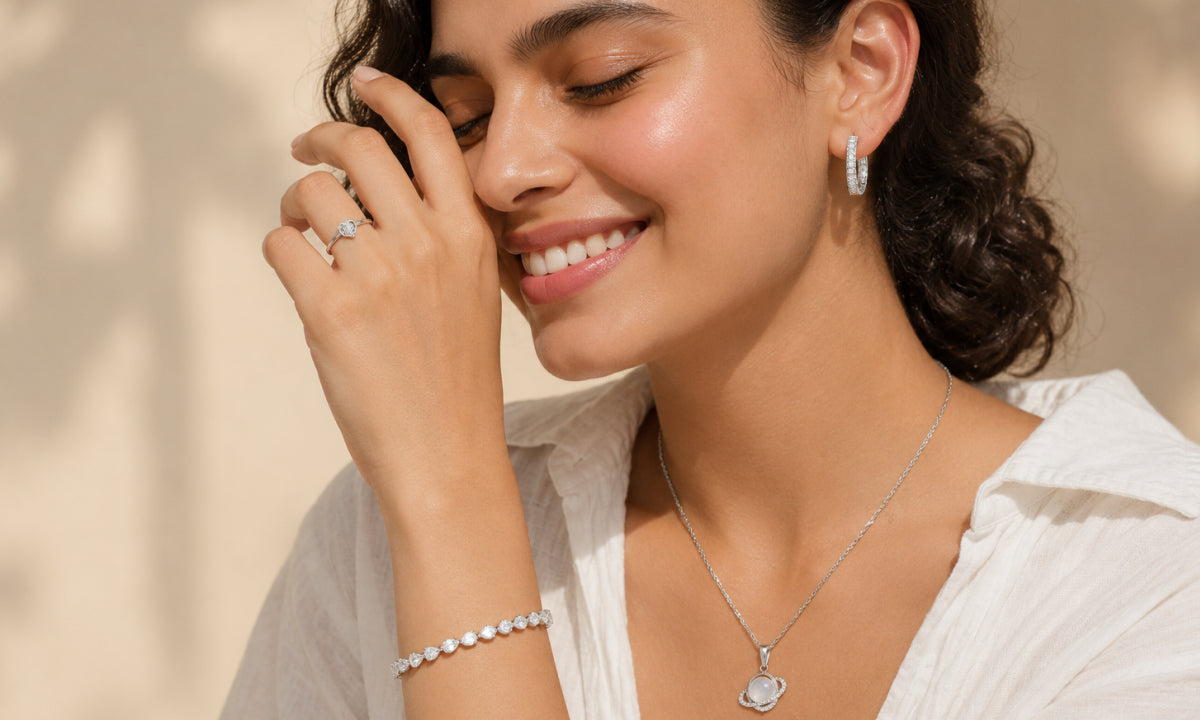
Silvogue’s daily wear collection brings this material into pieces such as rings, earrings, bracelets and pendants intended to fit into regular wardrobes.
Does a 925 Stamp Prove the Jewellery Is Genuine?
A stamp is useful information, but it should not be the only thing you check.
The number 925 indicates a claimed fineness. An official hallmark goes further: it records that an article has been assessed under a recognised hallmarking system. The Bureau of Indian Standards describes hallmarking as the official determination and recording of a precious-metal article’s purity or fineness. A standalone “925” stamp should therefore not be treated as equivalent to a verified BIS hallmark.
Under India’s revised silver hallmarking standard, silver hallmarking with a Hallmarking Unique Identification, or HUID, began on a voluntary basis in September 2025. The newer mark includes the BIS silver standard mark, the purity grade and a unique HUID code. Consumers can check eligible HUID-marked silver articles through the BIS Care app.
When assessing a purchase, look at the complete product information, invoice and applicable hallmark details rather than relying on a tiny stamp alone.
What Should You Check Before Buying 925 Silver Jewellery?
A clear listing should help you understand the whole piece, not just the number attached to it.
Confirm the Base Material
Look for a direct description such as “925 sterling silver.” If the piece has a gold polish or another surface finish, check what metal sits beneath that finish.
Read the Product Specifications
Dimensions, weight, closures and stone details can make a greater difference to everyday use than a photograph suggests.
Check Hallmark Information
If the piece is sold as BIS hallmarked, ask for or inspect the complete hallmark details. For an eligible HUID-marked article, use the BIS Care app to verify the code. bis.gov.in
Understand the Care Requirements
Silver can tarnish over time, and finishes or delicate details may need particular care. Review the seller’s instructions for cleaning and storage before purchase.
Buy from a Seller That Describes the Product Clearly
Material, finish, price, billing and after-sales information should be easy to find. This matters especially when buying jewellery online, where you cannot handle the piece before ordering.
Explore Silvogue by Ranka’s 925 silver jewellery and review the details of each design before choosing one.
Does 925 Sterling Silver Tarnish?
Yes. Tarnishing is a natural change that can affect sterling silver over time. Exposure to the surrounding air and conditions of wear or storage can alter the surface appearance. It does not, by itself, mean that a piece is fake.
Regular care helps maintain its finish:
-
Wipe jewellery gently after wear.
-
Store pieces in a clean, dry place.
-
Keep individual pieces apart to reduce scratching.
-
Follow product-specific instructions for polished, plated or stone-set designs.
Silvogue’s silver jewellery care guide offers further cleaning and storage guidance for its pieces.
Why Choose Silvogue by Ranka for 925 Silver Jewellery?
Silvogue brings contemporary silver jewellery together with the craftsmanship heritage of Ranka Jewellers. Its collections include pieces for daily wear, occasions and gifting, with 925 sterling silver forming an important part of its jewellery offering.
The right choice still depends on the individual product. Check its material, finish, dimensions and care details so that the piece suits how you plan to wear it.
Final Thoughts
925 silver and sterling silver are two names for the same 92.5% silver alloy. “925” states the fineness; “sterling silver” names the material.
That simple distinction makes jewellery listings easier to read. It also helps you ask the next useful questions: Is the piece solid sterling silver or plated over another metal? What finish does it have? Is it hallmarked? And will its design suit the way you intend to wear it?
For jewellery that moves easily between everyday outfits and special occasions, explore the 925 silver collection at Silvogue by Ranka.
FAQs on 925 Silver and Sterling Silver
1. Is 925 silver better than sterling silver?
Neither is purer. Both names refer to silver with a fineness of 925, meaning 92.5% silver.
2. What is the remaining 7.5% in sterling silver?
It consists of other metals used to make the alloy suitable for jewellery. Copper is commonly included, but the exact alloy composition can vary.
3. Is 925 silver real silver?
Yes. A genuine 925 silver article contains 92.5% silver. It is an alloy rather than 100% silver.
4. Does every genuine 925 silver piece have a BIS hallmark?
No. Silver hallmarking under India’s HUID-based system is voluntary. A “925” stamp and a verified BIS hallmark are also different things, so check the seller’s product information and any stated hallmark details.
5. Can I wear sterling silver jewellery every day?
Yes, if the particular piece is designed for regular wear. Its shape, fittings and finish affect how practical it will be, and gentle cleaning and proper storage help maintain its appearance.