
Navratri & Durga Pooja: Must-Have Silver Accessories for Your Home Temple
The nine nights of Navratri and the grand celebrations of Durga Pooja are not just festivals—they are living traditions. They mark a time when homes are transformed into sanctuaries of devotion, filled with chants, lights, and rituals. For many families, setting up a home temple becomes the centerpiece of these celebrations, where prayers are offered to the Goddess, and where the household gathers in unity.
While devotion is at the heart of these rituals, the accessories used in worship play a vital role. Among them, silver has always held a special place. Known for its purity, auspiciousness, and timeless beauty, silver puja items like samai (lamps), thalis, and diyas elevate the sanctity of every ritual.
Why Silver for Navratri & Durga Pooja?
Silver is more than just a precious metal—it is a symbol of purity, serenity, and divine blessings. According to Hindu belief:
- Silver represents the moon and carries cool, calming energies.
- Using silver in rituals is said to purify the environment and attract positivity.
-
It is considered auspicious to offer prayers and prasadam in silverware during festivals.
This is why, across India, devotees turn to silver puja items during Navratri and Durga Pooja to enhance the sacredness of their worship.
The Heart of Rituals: Must-Have Silver Accessories
1. Samai (Traditional Silver Lamps)
Lighting a lamp is the first step in any Hindu ritual. During Navratri and Durga Pooja, lamps are lit to invite the Goddess’s presence into the home. A silver samai is considered especially auspicious, as it represents purity and illumination.
- Significance: Lighting a samai signifies the victory of light over darkness and wisdom over ignorance.
- Designs: Silver samais come in elegant forms, often with motifs of lotuses, peacocks, or traditional patterns. They are sturdy, graceful, and designed to hold multiple wicks.
-
Usage: Families often light the samai at dawn and dusk throughout the nine days of Navratri and during Durga Pooja rituals.
2. Pooja Thalis
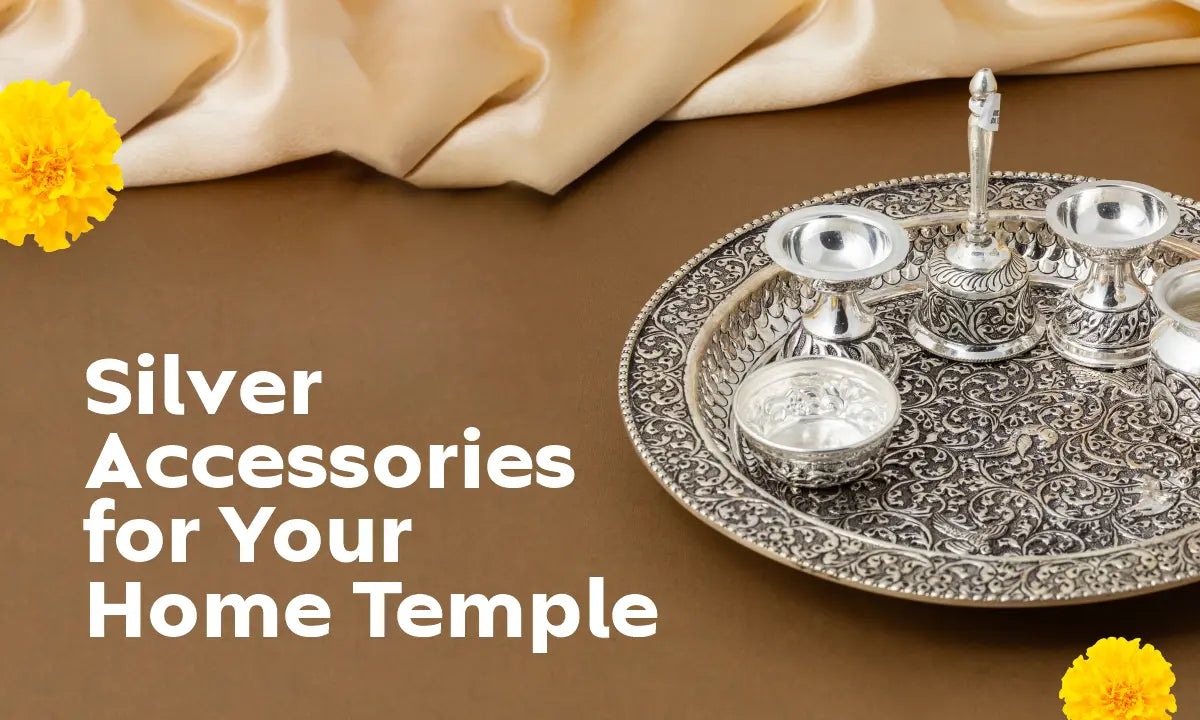
The pooja thali is the canvas on which the rituals unfold. It holds kumkum, haldi, rice, flowers, incense, sweets, and other offerings for the Goddess. Using a silver thali not only beautifies the ritual but also ensures that the offerings are presented in the purest way possible.
- Significance: A thali is more than utility—it embodies devotion and respect, organizing the sacred elements of puja into a harmonious whole.
- Designs: Silver thalis range from simple polished plates to elaborate ones engraved with deities or floral motifs. Many include small compartments or bowls for different offerings.
-
Usage: During Navratri, the aarti performed with a silver thali becomes a radiant moment, with diyas glowing and the reflection of flames dancing on the silver surface.
3. Diya / Niranjan (Sacred Lamps)
No Navratri or Durga Pooja is complete without the lighting of diyas. In fact, entire rituals revolve around the diya, symbolising the Goddess’s energy and the presence of divine light in the home.
- Significance: Diyas or niranjans represent the removal of negativity and the welcoming of divine power.
- Designs: Silver diyas carry artistry as well as symbolism. The peacock reflects beauty and devotion, while elephants symbolise strength and wisdom.
-
Usage: Diyas are lit during morning and evening aartis, and many households keep a diya burning throughout the nine nights as a mark of continuous devotion.
Creating a Devotional Ambience
Navratri and Durga Pooja are about atmosphere as much as ritual. Silver accessories help create an ambience that feels sacred, glowing, and serene:
- The soft flicker of diyas against polished silver creates a calming aura.
- A silver thali arranged with flowers and sweets becomes a centerpiece of devotion.
-
The steady glow of a silver samai fills the room with light that feels eternal.
Together, these elements transform an ordinary room into a sanctum of devotion and beauty.
Silver Accessories as Festive Gifts
Navratri and Durga Pooja are also occasions for exchanging gifts with loved ones. Silver puja items like samai, thalis, or diyas make thoughtful presents because:
- They are auspicious and bring blessings to the recipient’s home.
- They are practical, serving rituals year after year.
-
They carry sentimental value, often becoming heirlooms.
Gifting a silver diya or thali from Silvogue is more than giving an object—it’s offering prosperity, purity, and tradition.
Caring for Silver Pooja Accessories
To keep silver accessories shining throughout the festival season:
- Wipe with a soft cloth after each ritual to remove oil or soot.
- Store in anti-tarnish pouches when not in use.
- Avoid harsh chemicals; clean with mild soap and water if required.
-
Regular polishing ensures silver retains its natural glow for years.
With care, silver puja items can last generations, passed down with the memories of countless Navratris.
The Silvogue Promise
When it comes to sacred rituals, authenticity matters. Silvogue offers hallmarked 925 sterling silver puja essentials—crafted with precision, purity, and elegance. Their collection of samai, pooja thalis, and diyas not only adds grace to your home temple but also ensures that every ritual feels more divine.
Shopping directly from silvogue.in guarantees quality and trust, making your investment both spiritual and long-lasting.
Conclusion
Navratri and Durga Pooja are times of devotion, celebration, and connection with the divine feminine. The rituals performed during these festivals are enhanced by the accessories we use—especially when they are made of silver, a metal long associated with purity and auspiciousness.
By incorporating silver samais, thalis, and diyas/niranjans, you not only uphold tradition but also create a sacred atmosphere in your home temple. These items are more than functional—they are symbols of devotion, heirlooms of culture, and vessels of light.
This festive season, let your worship glow brighter. With Silvogue’s handcrafted silver puja essentials, every offering, every aarti, and every prayer becomes more meaningful—carrying the shine of silver and the blessings of the Goddess.