
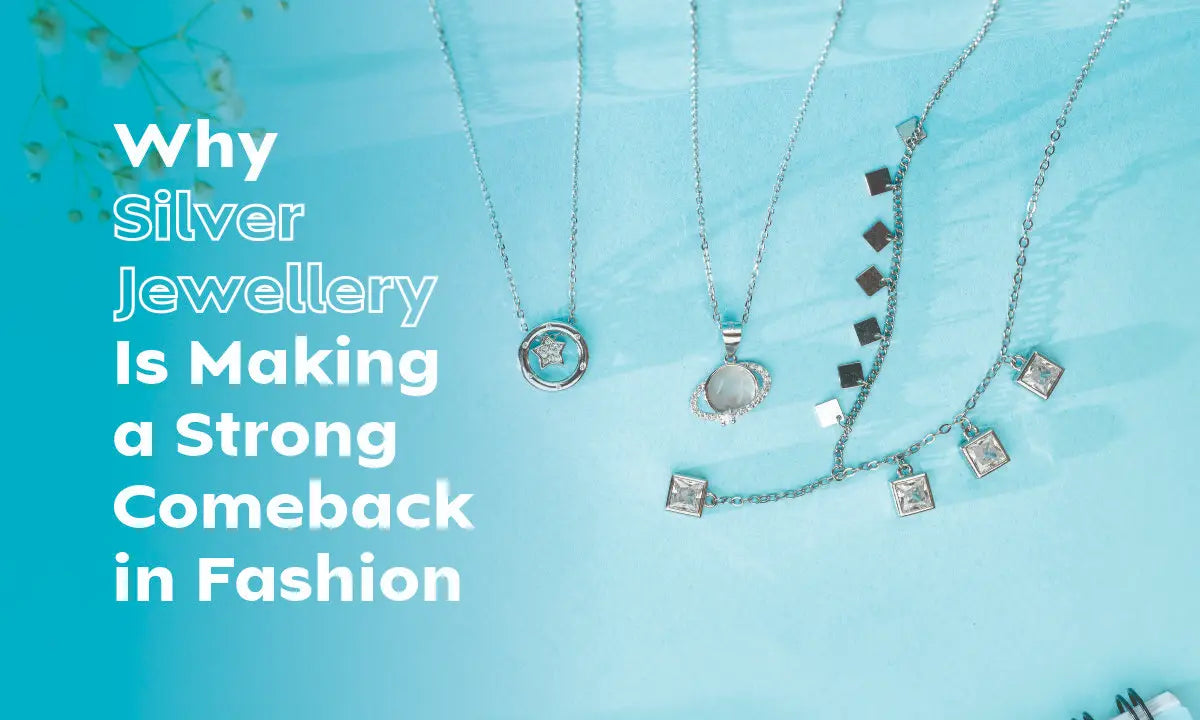
Why Silver Jewellery Is Making a Strong Comeback in Fashion
There are moments in fashion history when a material steps out of the shadows and reclaims the stage. For centuries, silver gleamed quietly alongside its more ostentatious cousin, gold—graceful, affordable, and versatile, yet often dismissed as secondary. Today, however, silver is having a renaissance. On catwalks, in celebrity wardrobes, and across Instagram feeds, sterling silver is shimmering with newfound authority.
It is no longer the underdog metal. It is the modern choice.
The Statistical Spark of a Revival
Fashion is never just about aesthetics; it is also about economics, demographics, and shifting cultural desires. Silver’s comeback is rooted as much in numbers as it is in nostalgia.
-
According to the World Silver Survey 2024, global demand for silver jewellery rose by 11% year-on-year, with India and the U.S. leading consumption.
-
In India alone, silver jewellery exports touched USD 2.9 billion in FY2023, with a projected growth rate of 9–10% annually.
-
A survey by McKinsey revealed that millennials and Gen Z account for over 60% of silver jewellery purchases, citing affordability, versatility, and modern design as key motivators.
-
On social media, hashtags like #SilverJewellery and #OxidisedSilver rack up millions of views, underscoring how digital culture has become silver’s most unexpected runway.
Numbers tell us what intuition already whispers: silver is no longer a supporting act. It is the headline.
From Antiquity to Instagram: A Cultural Echo
Silver has always carried cultural depth. In Vedic traditions, it was associated with purity and the coolness of the moon. In Mughal courts, it adorned goblets, anklets, and thrones. In the 1970s, silver jewellery became the uniform of counterculture, worn with kurtas, denim, and rebellion.
Now, in 2025, it returns with a new face. The modern consumer doesn’t just want heritage—they want versatility. Silver has proven to be the one metal that can embody both: it can be an heirloom and a fashion statement, a ritual ornament and a minimalist accessory.
Celebrities Who Crown Silver
The revival isn’t happening in silence; it’s being amplified by famous wrists, ears, and runways.
-
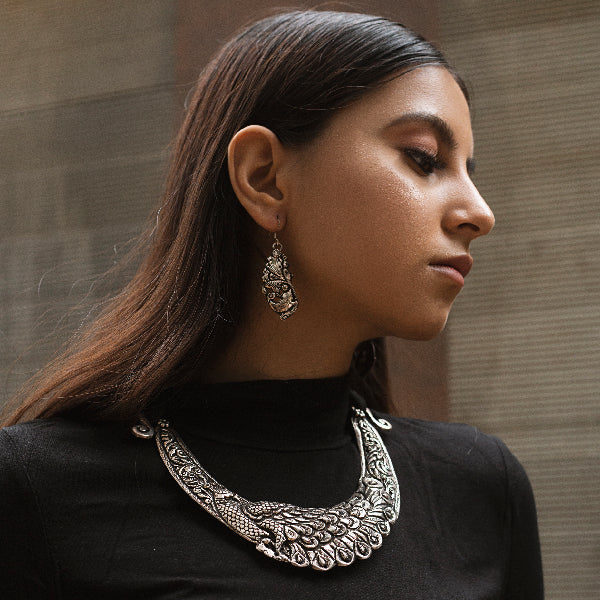
Zendaya, known for her bold red-carpet experiments, has been spotted in sculptural silver chokers and cuffs, demonstrating how the metal’s cool tone complements futuristic couture.
-
Deepika Padukone’s appearances in oxidised silver jhumkas during film promotions have reignited urban India’s love for temple-style pieces.
-
Harry Styles, the poster boy of gender-fluid fashion, frequently wears silver rings and chains—proof of silver’s genderless appeal.
-
At the Met Gala 2023, multiple designers leaned into silver, not as an accent but as a central motif. From Paco Rabanne’s metallic dresses to silver hoops adorning stars like Dua Lipa, the message was clear: the cool-toned metal is the new heat.
Silver has become the language of contemporary celebrity style—loud enough to be seen, subtle enough to never overwhelm.
The Psychology of Silver’s Allure
Why now? Why silver?
Fashion cycles often reflect collective psychology. Post-pandemic, the world’s appetite shifted: opulence gave way to minimalism, and people sought authenticity over excess. Silver fits these desires perfectly.
-
Affordability with dignity: It is precious, yet not intimidating. A silver ring feels luxurious without demanding extravagance.
-
Versatility: Silver pairs with both denim and designer couture, sarees and sneakers.
-
Sustainability: Consumers today prefer recyclable, ethical materials. Silver, endlessly reusable, aligns with conscious consumption.
Silver is not just jewellery. It is a philosophy in metal form—an emblem of understated strength.
Silver vs Gold: A Generational Shift
Gold has long reigned as India’s favourite. It is investment, dowry, security, and display. But for younger generations, gold often feels too heavy—literally and symbolically.
-
A 2023 Bain & Co. study showed that 70% of women under 35 prefer silver or platinum for daily wear, reserving gold for weddings or rituals.
-
Instagram polls among lifestyle influencers repeatedly show silver beating gold as the metal of choice for office wear, date nights, and festive casuals.
Gold still dazzles, but silver belongs to the everyday. That accessibility has made it the darling of Gen Z wardrobes.
The Literary Shine of Silver
If gold is a shout, silver is a whisper. If gold is noon, silver is twilight. Its brilliance is not harsh; it is reflective, poetic. Contemporary writers and stylists describe silver as “the colour of cool intelligence” or “the mirror of modernity.”
This literary dimension adds to its fashion appeal. Unlike flashy trends that exhaust themselves, silver’s comeback feels like an unfolding narrative—one that balances heritage with modern taste.
Silver does not scream for attention; it earns it quietly. And in a noisy fashion world, that silence feels like luxury.
Modern Designers Betting on Silver
Design houses are already responding:
-
Tiffany & Co. has relaunched iconic silver collections, positioning them as youthful and accessible.
-
Indian brands like Amrapali and Silvogue by Ranka are championing sterling silver with designs that blend temple motifs with contemporary aesthetics.
-
On the high street, brands like Zara and H&M collaborate with silver artisans for capsule collections, proving that silver has entered mainstream global consciousness.
When luxury and mass fashion converge on one material, a trend transforms into a movement.
The Future: A Silver Horizon
The comeback is not a fad—it’s a trajectory. With sustainability, affordability, and culture on its side, silver is set to dominate jewellery markets for the next decade. Analysts predict that by 2030, silver will account for nearly 40% of fashion jewellery sales worldwide, up from the current 25%.
It is not just an accessory anymore. Silver is becoming an identity marker—cool, versatile, timeless.
The Silvogue Reflection
Closer to home, brands like Silvogue embody this revival. By curating hallmarked 925 sterling silver jewellery—payals, jhumkas, pendants, and tableware—Silvogue demonstrates how silver can be rooted in tradition yet perfectly tuned to modern aesthetics. For working women, for festive shoppers, for Gen Z trendsetters—silver is no longer optional. It is essential.
Conclusion
Fashion always circles back, but silver’s return feels different—it feels permanent. It is no longer content to be the second choice, the poor cousin of gold. It has built a new vocabulary for itself: stylish, sustainable, versatile, literary.
Silver is the moon in a world obsessed with the sun. It does not blind, but it illuminates. It reflects every colour you pair it with, every story you wear it for. That is why it is making such a strong comeback—not because fashion dictates it, but because our collective consciousness desires it.
And when you next fasten a pair of silver jhumkas, or slide a sterling ring onto your finger, remember: you are not just following a trend. You are participating in a renaissance.